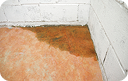



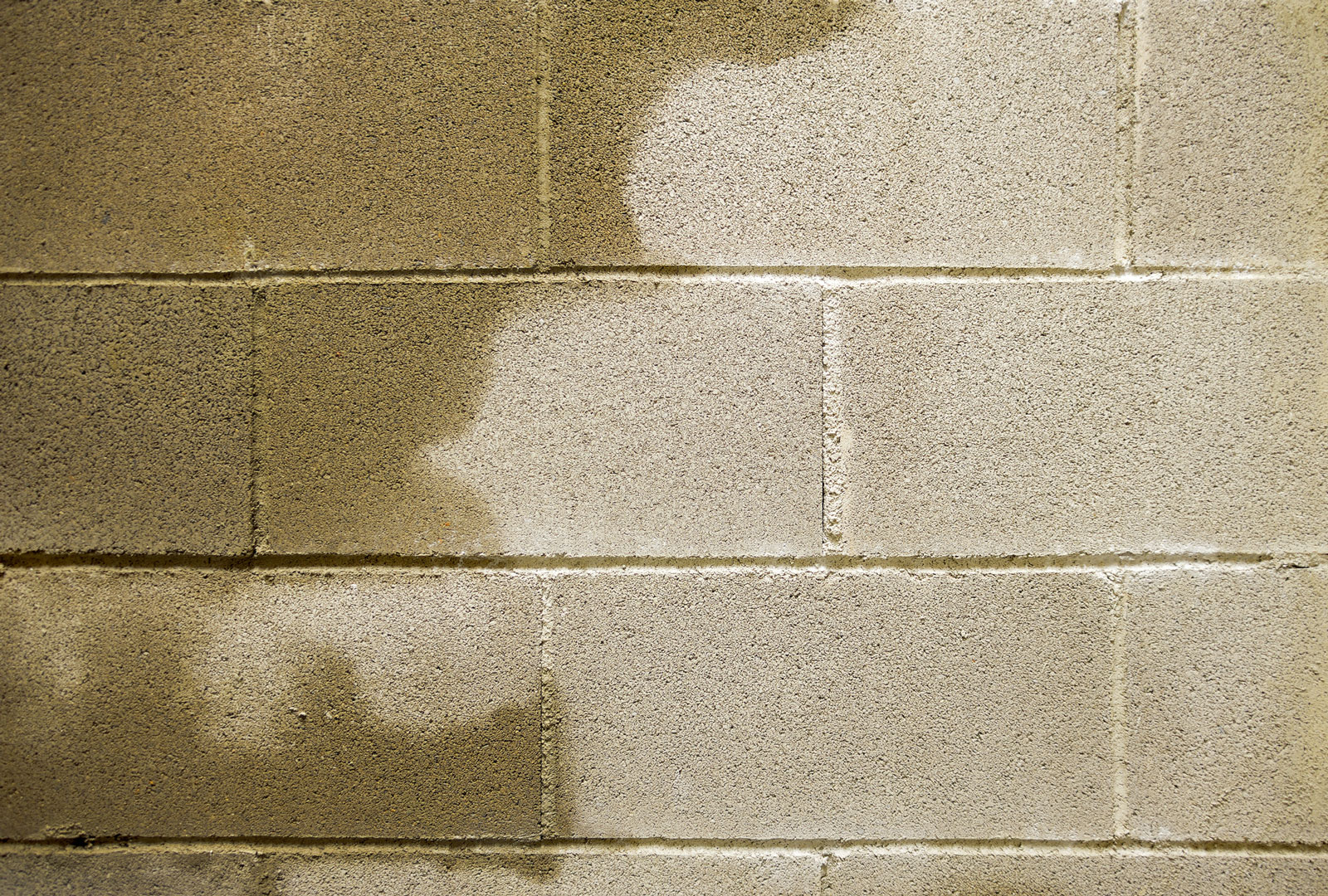

Naturally, most homeowners assume the worst, a foundation crack or a leak. But if the ground outside is frozen, where is that water coming from? In many cases, it isn’t a leak at all. It’s condensation, often referred to as basement “sweating.” Here is how to identify what’s actually happening in your basement during a midwest winter.
Why Basements “Sweat” in February
Concrete and cinder blocks are very effective at conducting cold. While the air in your basement might be 65°F, the walls themselves are often near freezing because they are in direct contact with the frozen earth.
When warm, moist air from your home—caused by things like showers, laundry, or your furnace humidifier—hits those cold walls, it reaches its “dew point.” The moisture in the air turns into liquid droplets on the surface of the wall. This can look exactly like a slow seep, but the water is actually coming from inside your house, not outside.
How to Tell the Difference: The Plastic Test
If you see moisture and aren’t sure of the source, you can perform a simple test with items you already have in your home.
- Dry a small area of the damp wall thoroughly.
- Tape a 1-foot square of clear plastic (Saran wrap works) over the dry spot. Use duct tape to seal all four edges tightly so no air can get underneath.
- Wait 24 hours.
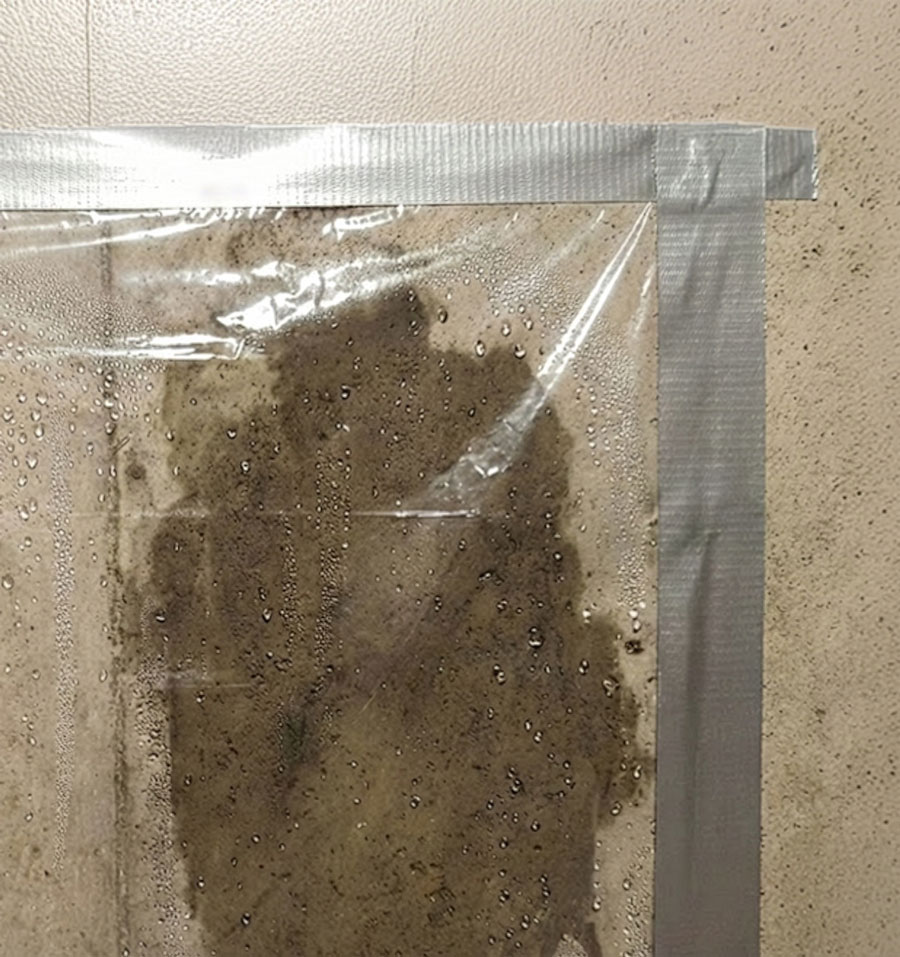
Click the above image for the full view.
If the moisture is on the outside of the plastic: It is condensation. Your basement humidity is too high, and the walls are too cold.
If the moisture is trapped behind the plastic (against the wall): You have a seepage issue. Water is being pushed through the foundation wall from the outside.
Why Even “Sweat” is a Problem
Even if it’s just condensation, you shouldn’t ignore it. Because we keep our homes sealed tight during the winter, that trapped moisture has nowhere to go. Over time, it can lead to:
- Musty Odors: That characteristic “basement smell.”
- Mold Growth: Mold thrives on damp surfaces, even if the moisture comes from the air.
- Efflorescence: This white, powdery residue is a clear sign of seepage. It occurs when water from the outside pushes through your foundation walls, drawing minerals out of the concrete and depositing them on the surface as the water evaporates. While it might look like harmless “fuzz,” it’s proof that moisture is actively migrating through your home’s structure.
Don’t Forget to Check Your Sump Pump
While it’s rare to have a major flood in 15-degree weather, your sump pump still needs to be functional. Southeast Michigan and Northern Ohio are known for sudden, brief temperature spikes. If we get a sunny, 40-degree day, the top layer of snow will melt. If your discharge line is frozen shut or buried in a snowbank, that water will have nowhere to go but back into your basement.
If your walls are damp this month, start with the plastic test. If the moisture is behind the plastic, or if you see “stair-step” cracks in your block walls, it’s a structural issue that needs to be addressed before the ground thaws in March.